Dialogue on the Three Seas Initiative within the European Committee of the Regions
On 2 October 2025, the Lubelskie Voivodeship, together with the East Poland House in Brussels, organised a conference entitled Three Dimensions of the Three Seas Initiative – Regional, Scientific and Parliamentary at the European Committee of the Regions in Brussels. The Lubelskie region was represented by Marshal Jarosław Stawiarski and Mieczysław Ryba, Chairman of the Regional Assembly.
As part of the conference, two thematic discussion panels were held. Panel I: Scientific Cooperation and Parliamentary Diplomacy in the Three Seas Region. The panel outlined the prospects for cooperation between universities in the Three Seas Initiative, with particular emphasis on opportunities for academic exchange and joint research programmes addressing shared cultural, political and religious heritage, as well as possibilities for economic and military cooperation. The issue of involving scientists from various fields and scientific disciplines was discussed, as well as the prospects of using research to implement plans for cooperation between the Three Seas countries in various areas. Another topic concerned the position of EU institutions (including the European Parliament), as well as the largest EU member states, toward the Three Seas Initiative. Possible areas of cooperation and contentious issues (the green deal, relations with the US, models of European integration) were discussed. The panel was attended by His Excellency Mr Josip Paro, Ambassador Extraordinary and Plenipotentiary of the Republic of Croatia to the Kingdom of Belgium, Her Excellency Ms Daniela Morari, Ambassador, Head of Mission of the Republic of Moldova to the European Union, Mr Serhiy Tereshko, Deputy Head of Mission of Ukraine to the European Union, Mr Arkadiusz Mularczyk, Member of the European Parliament, Mr Moray Gilland, representative of the European Commission, Directorate-General for Regional and Urban Policy, and Prof. Agnieszka Orzelska-Stączek from the Institute of Political Studies of the Polish Academy of Sciences.
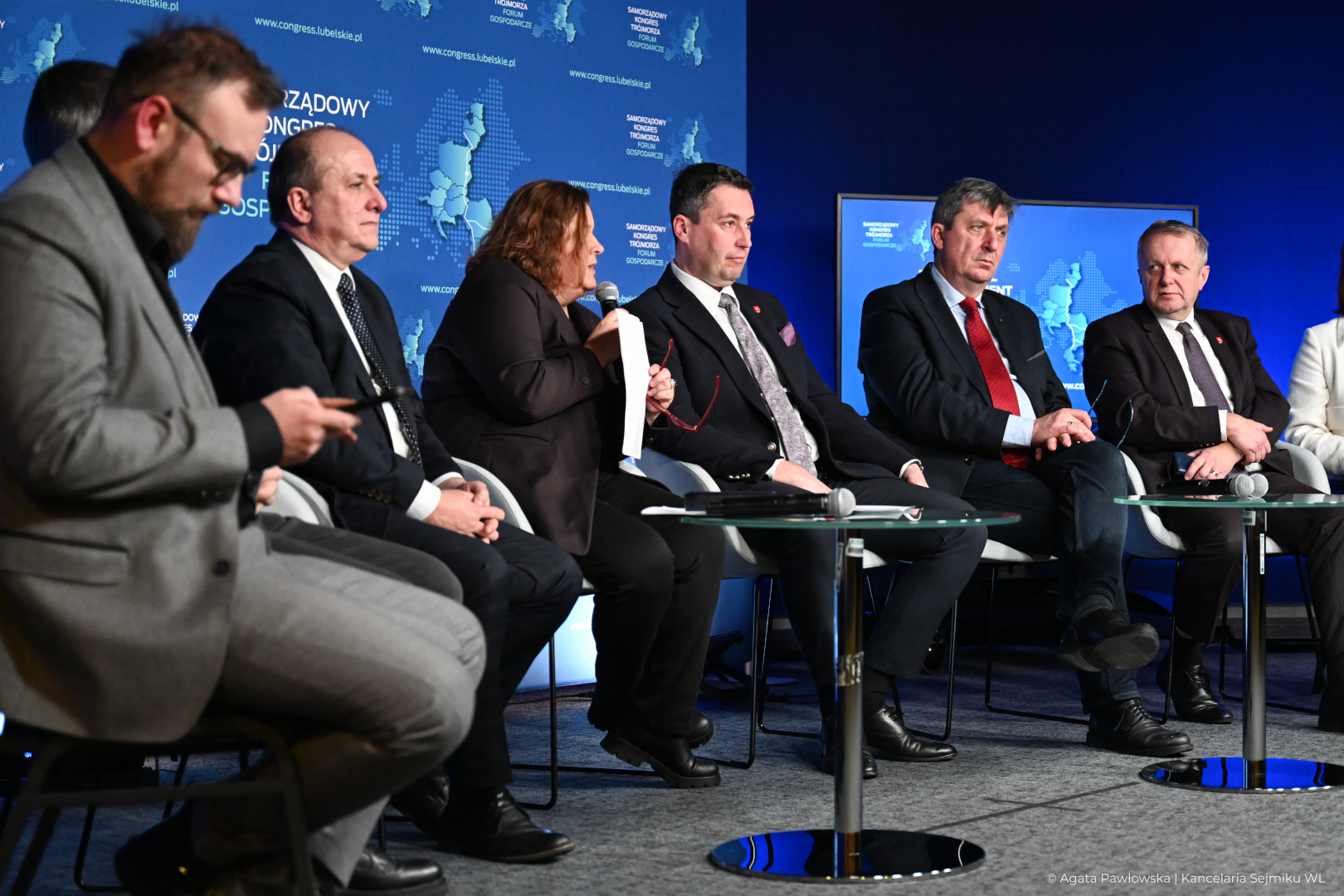
The second panel, Regional Cooperation in the Three Seas Initiative – from concept to practice, was focused on the role of local governments in the development of the Three Seas Initiative (3SI), a flagship regional project aimed at building cross-border infrastructure and improving connectivity and integration in the region. The panel addressed the progress and accomplishments of the 3SI thus far, the construction of the Via Carpatia expressway and its significance for the regions. In addition, ideas were presented for new areas of enhanced cooperation within the 3SI, such as improving infrastructure — used for development purposes as well as military mobility, logistics, and humanitarian aid — and exploring the potential for closer alignment of Ukrainian regions with the Initiative. The panel featured contributions from representatives of the following regions: Mr Jarosław Stawiarski, Marshal of the Lubelskie Voivodeship, Mr Milan Majersky, President of the Prešov Self-Governing Region (Slovakia), Ms Violeta Labazyuk, Head of the Khmelnytskyi Regional Council (Ukraine), Ms Małgorzata Jarosińska-Jedynak, Member of the Board of the Podkarpackie Voivodeship. Dr Konrad Popławski moderated the discussion from the Centre for Eastern Studies.
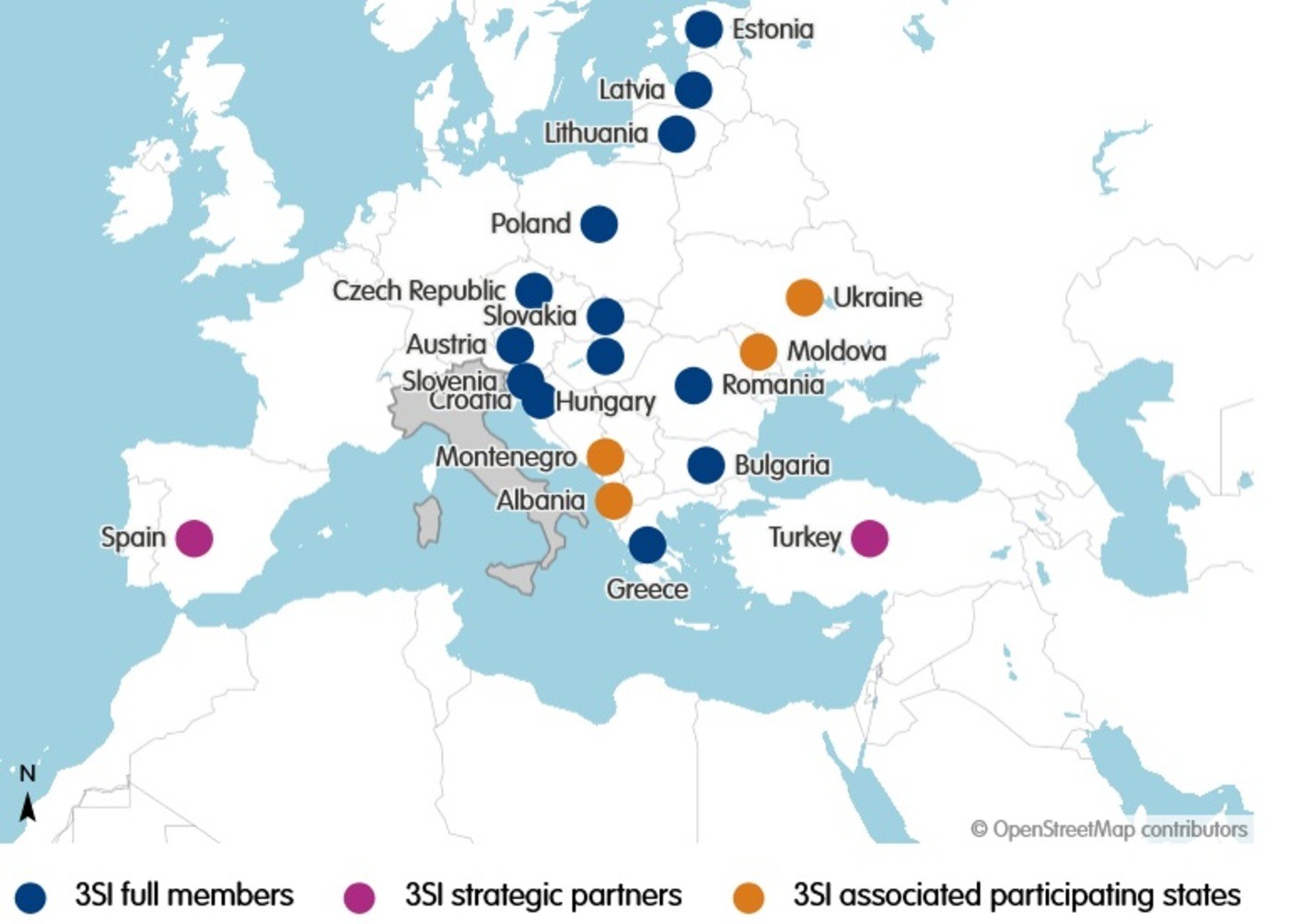
Since the formal establishment of the Network of the Three Seas Regions in 2021, 28 regional authorities from eight countries have been actively engaged in close cooperation. Our current priorities include enhancing economic development along the North – South axis near the eastern border of the European Union – a region increasingly at risk of marginalization due to the ongoing war beyond its borders. The strategic economic importance of this area is underscored by the fact that the 13 member states of the Three Seas Initiative represent over one quarter of the EU’s population, comprising 120 million citizens and a highly skilled workforce. Another key issue is the improvement of transport capacity and infrastructure along the eastern border of the European Union, particularly in relation to the strategically important Via Carpatia route and its connecting corridors leading to Ukraine and Moldova. The region serves as the ‘Eastern Gateway’ of the European Union, which is why both transport and social infrastructure are regarded not only as drivers of economic development, but also as essential components of security — not just for Central and Eastern Europe, but for the EU as a whole.
The event was attended by over 70 participants, including diplomats from Croatia, Moldova, and Ukraine; representatives of diplomatic missions from Bulgaria, the Czech Republic, and Slovakia; regional leaders from Central Europe, as well as scholars and local government officials. Additionally, 60 participants joined the event online.
Read more