Attitudes of Non-European Countries towards the Three Seas Initiative
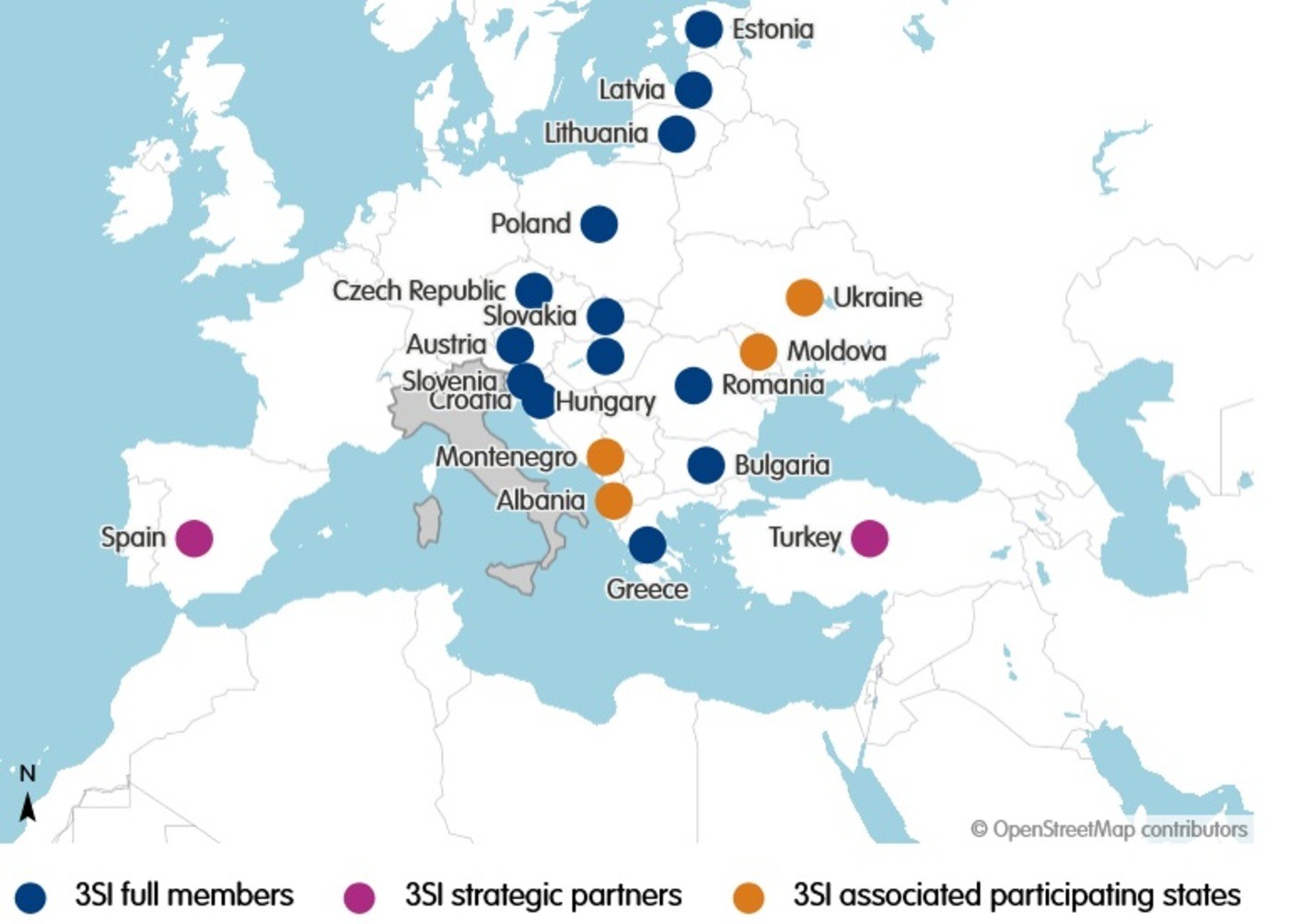
The geographical location of Central and Eastern Europe on the Europe-Asia communication route makes that region the object of heated geopolitical rivalry among big economies, such as the USA, China, or the EU countries. The competition of such strong players offers new perspectives of financing the development of the network of connections in the region.
A new and potentially interesting process in the development of transport, power and digital links within the Three Seas Initiative is the use of modern development mechanisms created by the USA. Responding to the changing geopolitical context, at the turn of 2019 and 2020 the Unites States restructured their development institutions (including USAID and OPIC), transforming them into the U.S. International Development Finance Corporation (US DFC, 2020). DFC combines the capabilities of an investment bank (such as granting bank guarantees and loans for developmental projects) and an investment fund (e.g. shares in projects). Currently, the dominating role of Washington in the Three Seas region is best seen in the power sector, which is further evidenced by the declaration made in 2019 by the U.S. Secretary of State Mike Pompeo of the United States investing USD 1 billion in the Three Seas countries.
Simultaneously with the activity of the USA and EU in the region of Central and Eastern Europe, China also stresses its involvement. Long-term co-operation plans include the power industry (with focus on energy generating technologies), while logistics and transport have been the dominating areas of activity since the Riga Summit in 2015. Those spheres are especially important for China in view of the transport dimension of the Belt and Road Initiative and the smoothly developing railway connections between China and the EU with Central and Eastern Europe playing the function of the ‘EU Gate’ and the main logistic centre.
Apart from China, Japan also marks its presence in the Three Seas Initiative. From the point of view of direct foreign investment, Japanese (and also South Korean) companies are much more significant in Central and Eastern Europe than Chinese entities. In 2018 the Japanese Prime Minister, Shinzō Abe, visited five countries of the Three Seas region: Lithuania, Latvia, Estonia, Bulgaria and Romania. In April 2019 in Bratislava he met with the leaders of Poland, Slovakia, the Czech Republic and Hungary. That summit took place at the same time as the Belt and Road Forum in Beijing, which shows Japan’s aspirations to compete with China in building a network of connections in Central and Eastern Europe. The framework for the Japanese activity as regards organizational and capital-related issues has already been set out, inter alia, in the EU-Japan Partnership on Sustainable Connectivity adopted during the 2019 Brussels conference; both parties guaranteed co-operation in the development of transport, the power industry and digital infrastructure in Eurasia.
Source: W kierunku budowy bliższych powiązań. Trójmorze jako obszar gospodarczy, Polski Instytut Ekonomiczny
Read more