Economic Potential of the Three Seas Region
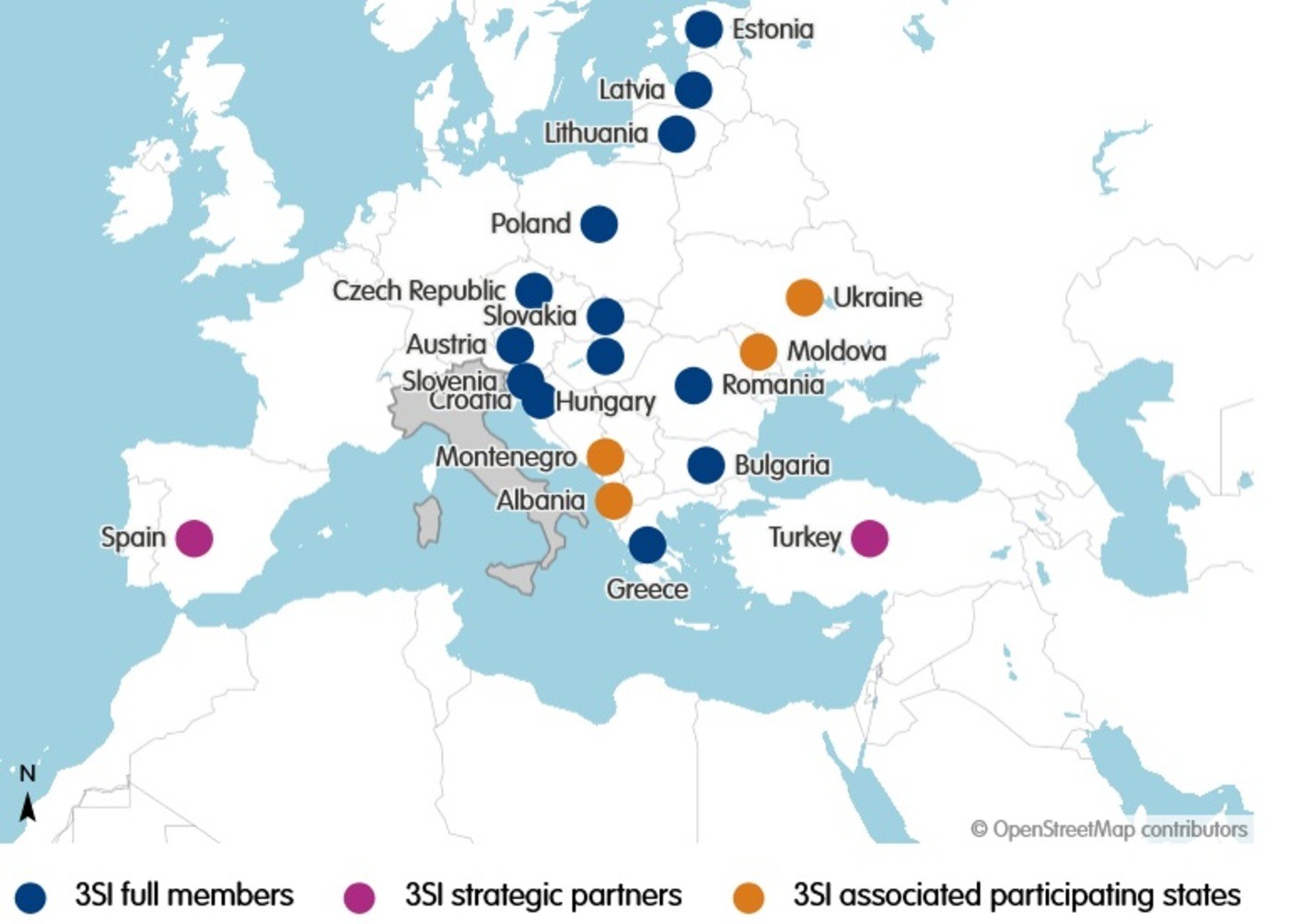
The last 15 years marked the phase of robust economic growth for the Three Seas Region. The 3SI countries were listed among the most dynamically developing areas of the EU, as their economic growth dynamics was higher than average for the Community (the exception being Croatia).
The position of the Three Seas Region within the EU was improved by good economic results of its member states. In 2004, the Three Seas Region generated 15.2% of the EU’s GDP, while in 2018 that percentage grew to 19.1%. That upward trend was even noticeable in the period of the financial crisis, i.e. the years 2008-2009. Thus, the Three Seas Region proved that its macroeconomic foundations were sound and able to revive the economy after a short-term recession.
An important source of economic stability for the 3SI countries has been their concentration on industrial production. Eight out of ten EU countries with the highest share of the GDP added value generated by the industrial sector are the 3SI countries. The average share of added value generated by industrial production in those countries was 16.7%, as compared to barely 13% for the entire EU. The Three Seas Initiative members have resisted the general deindustrialization trend prevailing among developed countries. This has turned the Three Seas Region into a vital industrial centre for the entire European Union, in less than twenty years from joining the EU.
We owe the development of the economic potential of the Three Seas Region to strong trade links with the biggest EU economies. The trade exchange with the Three Seas Region is particularly important for the German economy. This is connected with German investments in the automotive sector. Many German automotive companies have their car components and low-end models manufactured in the 3SI countries. Thanks to investments of German automotive manufacturers in southwestern Poland, the Czech Republic, Slovakia, Hungary and western Romania, a cluster of German-Central European supply chain was formed (IMF 2013). Considerable involvement of the Three Seas countries in Russia’s foreign trade results from the dependence of Central Europe on Russian energy carriers. It may also be noticed that the Three Seas Region does not have any strong commercial links with more distant countries in which industrial production has a lower share in GDP. This is the question of fewer investors from those countries doing business in Central Europe and insufficient ability of the Three Seas countries to offer attractive goods that could beat those offered by very competitive US and UK markets. Competing successfully with those markets would require innovation and strong capabilities in organization and logistics. It is worth noting that the high level of industrialization of the 3SI Region does not mean that other economy sectors are neglected.
Source: "W kierunku budowy bliższych powiązań. Trójmorze jako obszar gospodarczy" [‘Building Closer Connections. The Three Seas Region as an Economic Area’], Polski Instytut Ekonomiczny [Polish Economic Institute]
Read more