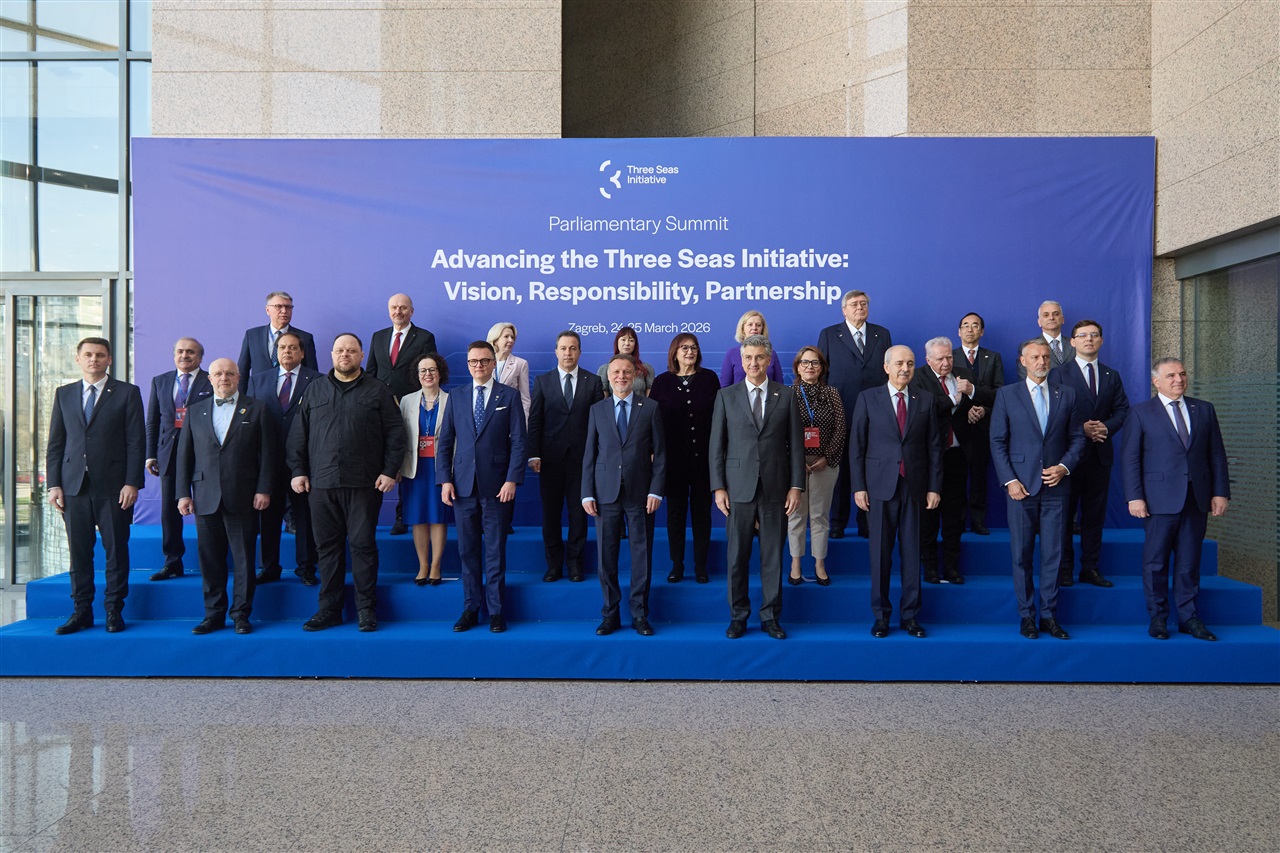
Parliamentary Summit of the Three Seas Initiative in Zagreb
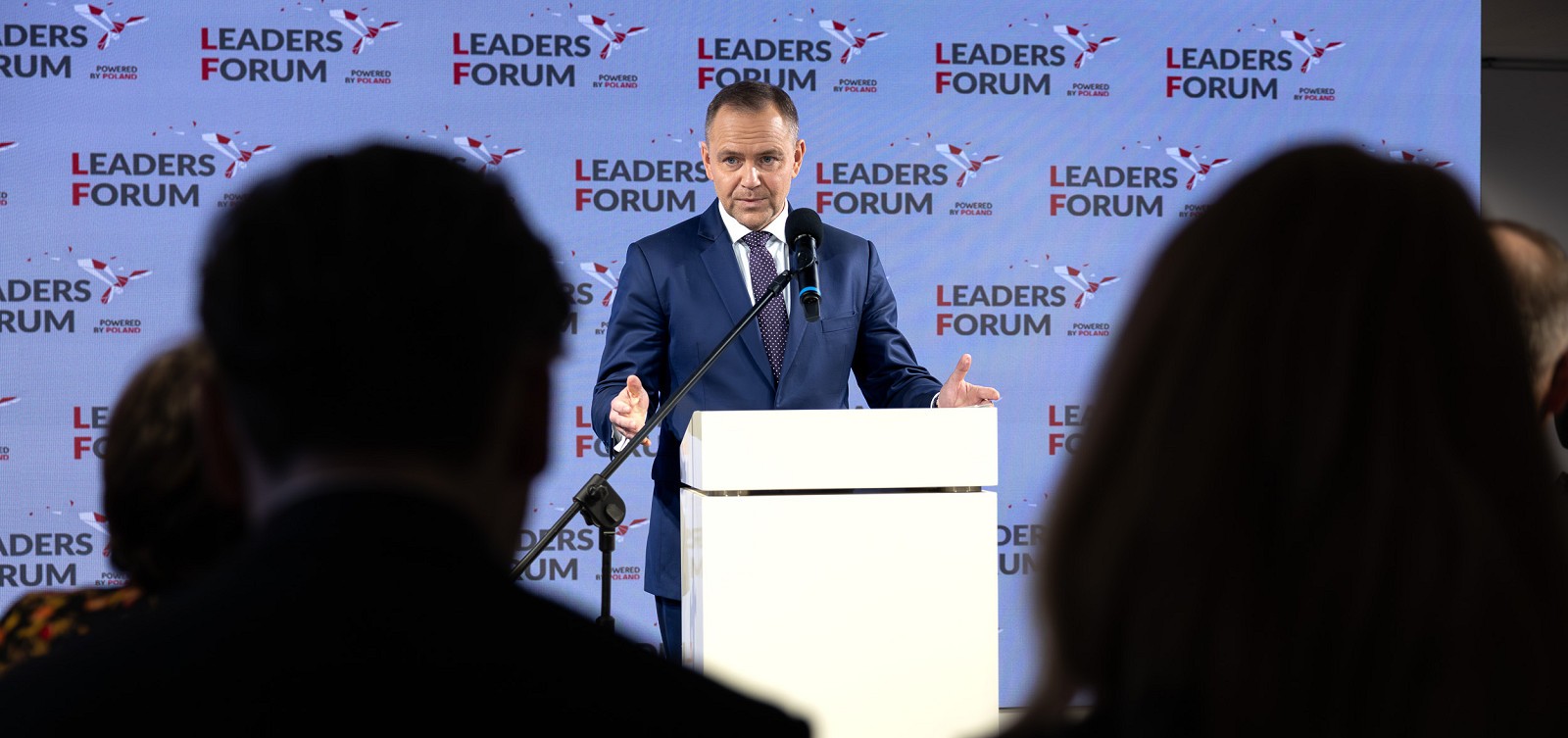
On March 24-25 the Parliamentary Summit of the Three Seas Initiative took place in Zagreb. In the final part of the Parliamentary Summit of the Three Seas Initiative deputy-speakers/vice-presidents and other high-level representatives of the parliaments of participating and associated participating states, as well as representatives of strategic partners and special guests, addressed the meeting highlighting the growing political importance and multidimensional character of the Initiative.
Speakers broadly reaffirmed the significance of the Three Seas Initiative as a platform for strengthening regional connectivity, economic convergence, and resilience in Central and Eastern Europe. Particular emphasis was placed on the development of infrastructure in transport, energy, and digital connectivity, as well as on enhancing energy security and diversification of energy sources.
Several delegations stressed that the Initiative should remain complementary to the framework of the European Union and contribute to the EU’s common objectives, including cohesion, competitiveness, and the green transition. The importance of aligning investments with sustainability goals was also emphasized, alongside ensuring good governance, transparency, and the efficient use of public and private financial resources. Participants also warned of an increasingly complex geopolitical environment. Strong and continued support for Ukraine was reiterated, and Russia’s aggression was clearly condemned. Broader security implications of ongoing conflicts were highlighted, with emphasis on the need to strengthen resilience through improved infrastructure, military mobility, and regional cooperation in defence and energy.
The discussion further underscored the strategic value of parliamentary diplomacy. Participants called for more structured and continuous parliamentary engagement, including the establishment of permanent cooperation mechanisms and stronger collaboration with governments, experts, and the business community. The importance of exchanging best practices and ensuring sustained political focus on the Initiative was highlighted.
Statements by strategic partners and associated countries confirmed the Initiative’s growing international dimension. Its role was emphasized not only as a regional infrastructure platform, but also as an instrument for strengthening broader European and transatlantic cooperation, as well as for supporting EU enlargement policy and the integration of partner countries. At the same time, the concrete impacts of key projects in the fields of energy, infrastructure, and innovation were highlighted, along with the need to accelerate their implementation in order to deliver visible results for citizens and the region’s economy.
The Summit concluded with the presentation and adoption of the Joint Statement by the Speakers/Presidents of Parliaments and high-level representatives of the participating states of the Three Seas Initiative. The document reaffirms the shared commitment to strengthening connectivity, resilience, and cooperation in the Three Seas region, while also supporting transatlantic relations and the EU enlargement policy. Participants strongly condemned Russia’s aggression against Ukraine and reiterated their unwavering support for Ukraine’s sovereignty, independence, and territorial integrity, as well as for the efforts to achieve a comprehensive, just, and lasting peace. The Joint Statement also calls for further strengthening of parliamentary cooperation through regular high-level meetings, stronger coordination among national parliaments, and more intensive involvement of relevant stakeholders, including the private sector.
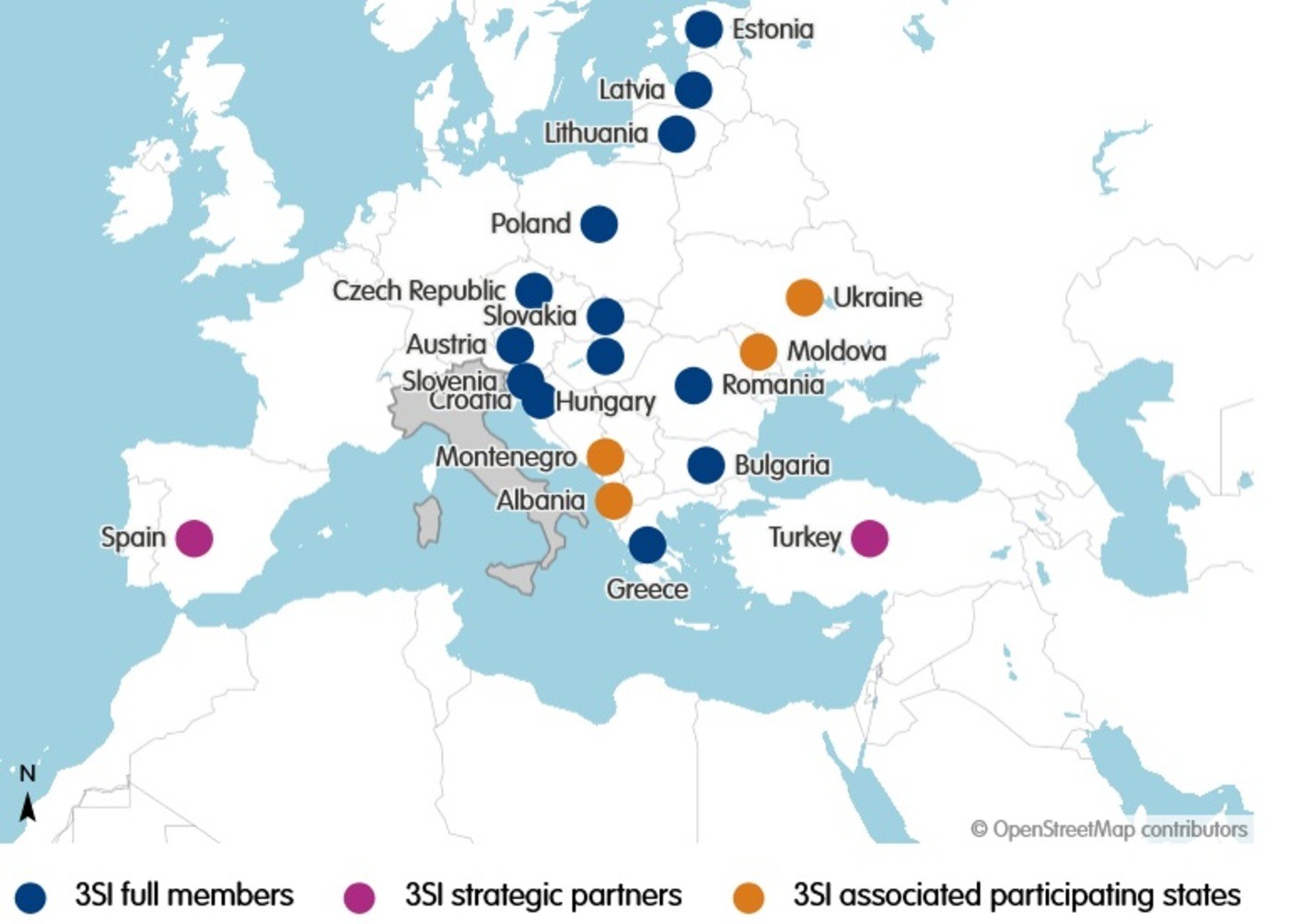
The Parliamentary Summit was officially closed by the Speaker of the Croatian Parliament, who declared the Joint Statement adopted and welcomed the support of the Initiative’s associated participating states, Albania, Montenegro, Moldova and Ukraine, as well as its strategic partner, Türkiye. He also wished Slovakia success in assuming the chairmanship of the Three Seas Initiative following the Summit in Dubrovnik in April 2026.
Autor zdjęcia: Hina/Edvard Šušak
Read more