About the engagement of countries in the Three Seas Initiative, Russia’s attitude and the influence of pandemia.


Żurawski vel Grajewski: Russia cannot stop the Three Seas Initiative (INTERVIEW)

Americans have engaged in the Three Seas Initiative because it is an important business project for them. It opens new markets for their energy resources. Russia doesn’t like this, but it doesn’t have any tools to impact Central and Eastern Europe – says professor Przemysław Żurawski vel Grajewski in an interview with BiznesAlert.pl. He also stressed it was too early to determine the coronavirus’ impact on this project.

BiznesAlert.pl: Why has the US engaged in the Three Seas Initiative (TSI)?


Przemysław Żurawski vel Grajewski: One of the areas of cooperation within this initiative is the infrastructure used for transmission of energy sources – mostly gas. TSI could introduce American gas to a huge market with 100 million consumers. This will happen if proper infrastructure is constructed. We should remember that in the beginning the TSI was based on the so-called North-South Corridor, which will connect Poland’s LNG terminal in Świnoujście to the floating terminal on Croatia’s Krk island, which is under construction. The Constanta LNG terminal in Romania could be the third part of this infrastructural endeavor. This means the region could potentially drive out Russian gas, which so far has been its only energy source, from its territory.


What are the specifics of the US engagement in developing this initiative?


The first specific action is to spend a billion dollars on financing energy infrastructure projects. This was promised by Mike Pompeo, the US Secretary of State, during the Munich Security Conference. At first glance it doesn’t look like a lot of money, but it is a message, which says that the initiative is taking place under the US political umbrella. It makes the entire project look more serious. We should also remember that this is a message to the American business. The US government rarely makes large investments in such supra-national projects on its own. This is mostly done by private US companies. The billion dollar sends a message that this region has US support and that it is worth to invest here. This may start the snowball effect, which in time may become the driving force for more investments made by private American firms. Another element is support in the aspect of security. Americans are famous for protecting their businesses, which sometimes involves the usage of military force. The more American investments in the region, the more secure the region becomes, as it is protected from any potential invasion, e.g. from Russia. This is a very important aspect. By attracting American investments, we are attracting here – to the region of the eastern flank of NATO, the American security umbrella.


Could our eastern neighbors, such as Ukraine or Belarus get engaged in the TSI?


On 29 August 2019 the Energy Resources of Ukraine signed a deal with Poland’s PGNiG to supply US natural gas to Ukraine. After that, right before the 80th anniversary of the outbreak of World War II, the Polish President Andrzej Duda, the US VP Mike Pence and the President of Ukraine Volodymyr Zelensky signed a memorandum of cooperation to strengthen the security of regional gas supplies. This political declaration ensures a new transmission route for gas to Ukraine. Its success has been confirmed by the first delivery of American LNG to Ukraine that reached the LNG terminal in Świnoujście last November. The recent letter of intent, which has been reported on by the media, says the US will deliver about 6-8 bcm of gas a year to Ukraine via Poland. Since only EU members are allowed into the TSI, Ukraine cannot formally join the club. However, it can participate in projects pursued by the TSI. Cooperation as part of the TSI is also taking place with regard to road infrastructure and Ukraine, as a signatory of the second Łańcut declaration, is a full member of the Via Carpatia project, which is one of the flagship projects of the TSI. Thanks to Poland, this is the way in which Ukraine is able to take part in some of the TSI endeavors. This is an important factor from a political perspective because it tears Ukraine from the Russian sphere of influence.


Are there similar plans when it comes to Belarus?


The situation is dynamic. There is no trust between Alexander Lukashenko and Vladimir Putin. The first one is trying to protect his life and the life of his family. In case of Belarus all scenarios are on the table. Russia is embedded in Belarus a lot more than in Ukraine, this is also because of Lukashenko’s past decisions. Therefore, Moscow has more influence over this country. I believe that Belarus would be able to free itself from Russia’s grip only if there was a political implosion at the Kremlin. Nobody knows for how long Russia will be able to finance its imperial projects. We also don’t know how its imperial capacity will be affected by the coronavirus and the extremely low oil prices.


If America was determined, and if an opportunity presented itself, and if Washington noticed it, and decided that getting Belarus out of the Russian sphere of influence was a a low hanging fruit, it would be possible to take concrete actions towards Belarus. However, so far it doesn’t look like it’ll happen. America is testing various options, but Russia is still in control of the situation.


So how can Russia try to torpedo the TSI?


Russia’s impact in the TSI area is limited. This project includes EU member states and NATO countries – apart from Austria. The only tool that Russia has been using for centuries is political destabilization of countries it believes are its enemies. As Emperor Alexander III said “Russia has only two allies – its army and its fleet”. This means it treats the entire world as either its current or future enemy. The closer and smaller its neighbors are, the more they are treated like enemies. Therefore, attempts at destabilizing those states are part and parcel of Russian politics. This means Moscow may want to impact elections in the TSI states and try to pull individual countries away from the initiative. This will happen by propping up political movements that are against the TSI. To an extent this is what is happening in Croatia where president Kolinda Grabar-Kitarović, who was a strong supporter of the TSI, was replaced by Zoran Milanović, who is completely opposed to it. Of course, I am not saying this happened because of Moscow, but this change is undoubtedly in line with its interests. Still, these are individual incidents and I doubt that any attempts made by Russia to impact politics in the TSI countries could be so successful that they could break the initiative up.


Is it possible for China’s increasing engagement in Europe to impact the TSI? Is the Chinese idea of “one belt, one road” in opposition to the US engagement?


The goal of the New Silk Road idea wasn’t to undermine the US support for TSI. At some point China realized that its economy, which is dependent on sea transport, could be completely blocked by the US navy in case of a conflict with the USA. This is why they started to look for a way to connect with Europe via roads. However, we should appreciate the fact that CEE states have been in a close transatlantic partnership for years. The majority of TSI states constitute NATO’s eastern flank. Apart from some exceptions, nobody in this region would have a hard time picking sides between China and the US. The choice is simple – it’s the US.


What are TSI’s biggest challenges?


I think there are two. The first one and the main one is money. After years of successful initiatives at the governmental level, we should finally start to translate political initiative to executive budgetary decisions. Now that a huge economic crisis is coming, it will be more difficult to create a fund to bankroll the TSI. This may be one of the biggest threats. The second challenge are the differences between the TSI members when it comes to their national and economic interests. The contrast between Austrian and Romanian economies is stark, just as in the case of Estonia and Bulgaria. This is why any claims that the TSI is a political project are not serious. This project is glued together with infrastructural programs and we should do whatever is in our power to implement them. The economy of the TSI’s biggest participant – Poland and the perfect Polish-American relations that attract Washington’s support to the initiative allowed us to be hopeful about TSI projects related to our country, but that was before the coronavirus pandemic started. Now this may change, but it is too early to tell what the pandemic’s economic impact will be.


Interview by Mariusz Marszałkowski


Source: biznesalert.pl

Read more


A visit to Slovakia by President Karol Nawrocki


On Wednesday, Polish President Karol Nawrocki visited Bratislava, where he met Slovakian President Peter Pellegrini. The main topics of discussion were political, economic, and infrastructure–related issues.


During a press conference, Karol Nawrocki emphasised that Poland and Slovakia are not only neighbours, but also long–standing friends. „In 2022–24, Polish pilots took part in air–policing mission of Slovakia’s airspace, and when the Polish border was violated by Russian drones, President Pellegrini and Slovakia unequivocally declared their solidarity with Poland” – he recalled.


The President emphasised that the primary objective of Poland and Slovakia is to strengthen their partnership within organisations such as the Visegrad Group, the Three Seas Initiative and the Bucharest Nine, while also taking responsibility for NATO’s eastern flank.


President Nawrocki also emphasised the need to strengthen infrastructure cooperation. He welcomed with satisfaction the Slovakian President’s declaration that construction of the R4 route, which forms part of the Via Carpatia project, will be completed in the coming years.


The President believes that such actions will contribute to the economic development and security of our region. ‘Following my meetings with President Donald Trump, I proposed that Poland should become as soon as possible a hub for gas supplies from the United States. We have a terminal in Świnoujście and I hope that construction of the floating terminal in the Baltic Sea will be completed soon. We also have an interconnector with Slovakia,” said Karol Nawrocki. He added that „Poland’s infrastructure development and our cooperation will lead us to independence from Russia throughout the region.”


President Nawrocki also confirmed that he had discussed migration with Peter Pellegrini. The Polish and Slovakian Presidents agreed that EU institutions cannot decide where to deploy migrants who pose a threat to security within Member States. President Nawrocki expressed his hope that, at the December Visegrad Group Summit, it would be possible to convince the Hungarian and Czech delegations to adopt this position as well.


While in Bratislava, President Nawrocki also met the Slovak Republic’s Prime Minister, Robert Fico, and its President of the National Council, Richard Raši.


Courtesy of: Chancellery of the President of the Republic of Poland (https://www.president.pl/news/a-visit-to-slovakia-by-president-karol-nawrocki,109798)

Read more


CONGRESS 2026 AGENDA


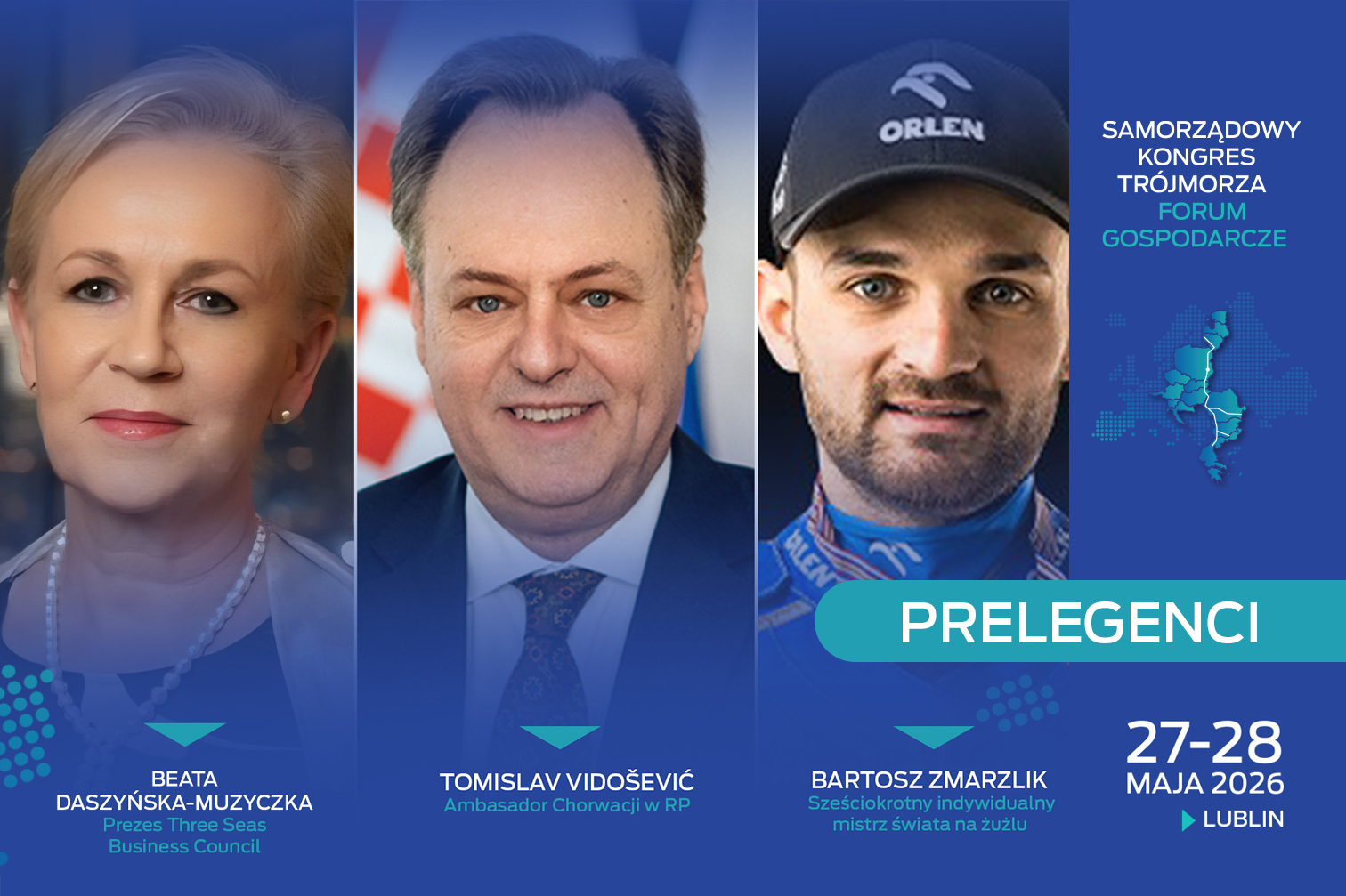
Registration deadline for the 6th edition of the Three Seas Local Government Congress is fast approaching. Registration will remain open until May 21, 2026, or until all available spots are filled.


Take a moment to review the event agenda. It includes a variety of engaging program points and guest speeches that will share their knowledge and experience.


This year, we are honoured to collaborate with a distinguished group of partners, including among others, the Chancellery of the President of the Republic of Poland, Institute of Political Studies of the Polish Academy of Sciences, Three Seas Business Council, Centre for Eastern Studies (OSW), Institute of Schuman’s Thought, Digital Poland, as well as Polish universities: the John Paul II Catholic University of Lublin, Maria Curie-Skłodowska University, Nicolaus Copernicus Superior School in Warsaw, and the Academy of Zamość.


SEE THE AGENDA 2026


AGENDA 1 DAY (27.05.2026)


AGENDA 2 DAY (28.05.2026)


MEET THE 2026 SPEAKERS


SPEAKERS 1 DAY (27.05.2026)


SPEAKERS 2 DAY (28.05.2026)


We also encourage you to follow updates about the Congress on our main page and on social media.

Read more


The Three Seas Local Government Congress under the Honorary Patronage of the President of Poland


The 6 th edition of the Three Seas Local Government Congress will be held May 27-28, 2026, under the Honorary Patronage of the President of the Republic of Poland, Karol Nawrocki. This distinction recognises the growing importance of the event, which has become a key platform for cooperation among the countries of Central and Eastern Europe, both in the economic and infrastructural dimensions.


Over five editions of the Congress (2020–2025), more than 5,000 participants from 24 countries have taken part, 104 discussion panels have been held, and 64 foreign delegations have visited Lublin. The scale and international character of the event confirm its increasing role in shaping dialogue across the Three Seas region.


We, the countries representing Central and Eastern Europe (…) through the Three Seas Initiative, Via Baltica, and Via Carpatia, share not only our voice and vision of building a civic community, but also tangible results showing that the Baltic States and the countries of Central and Eastern Europe are capable of implementing major infrastructure projects, emphasised President Karol Nawrocki during his visit to Vilnius last month.


These words perfectly capture the spirit of the Three Seas Congress, which brings together political, academic, and business communities around a shared goal, building a strong, integrated, and cooperative Central and Eastern Europe.


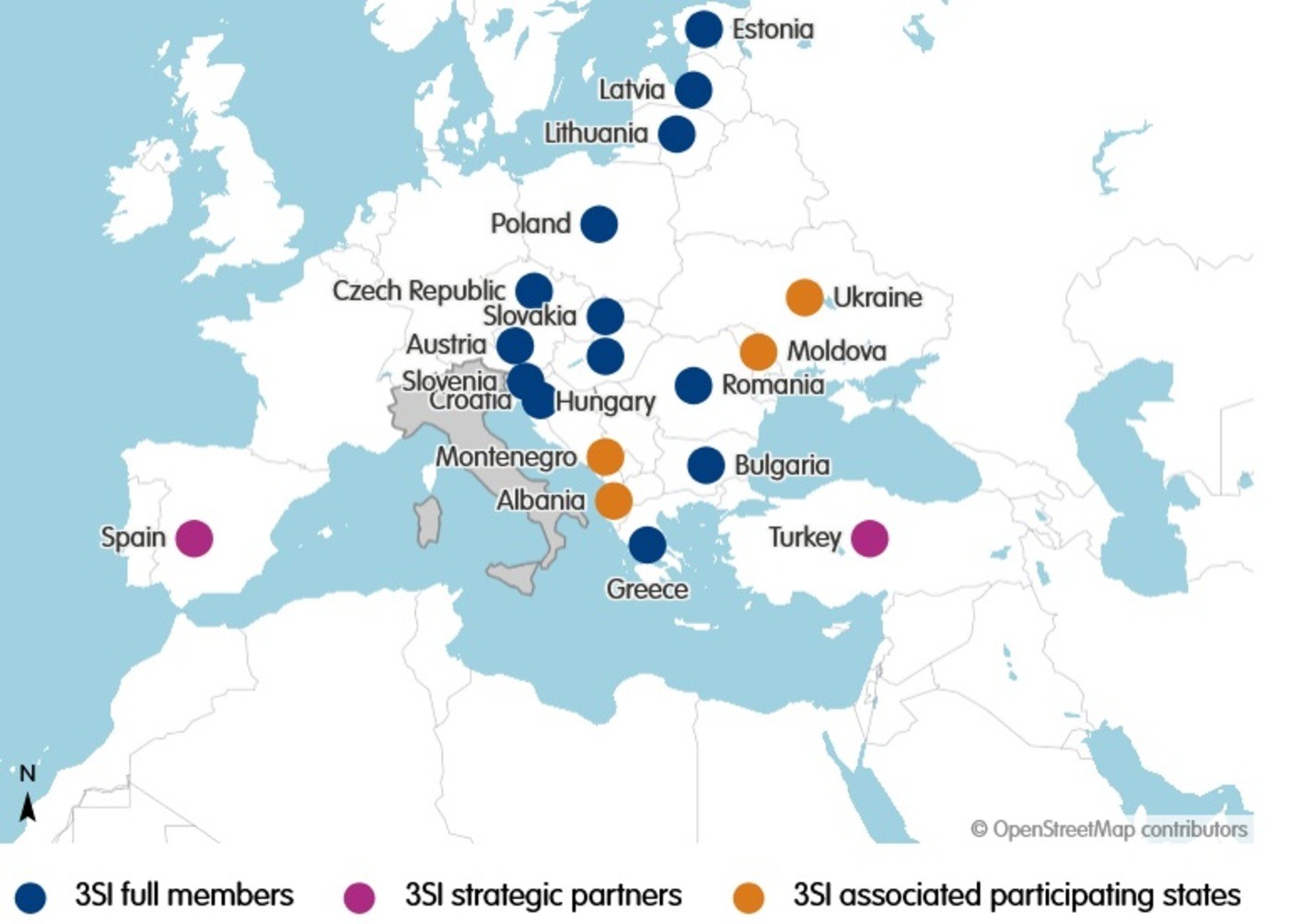
It is also worth noting that in April 2025, Poland hosted the 10th Three Seas Initiative Summit. During the event, participants emphasised the importance of infrastructure and economic cooperation in the region and the need to strengthen cohesion across Central and Eastern Europe. This year, the cooperation format has been expanded to include new members – Albania and Montenegro joined the Three Seas Initiative in the capacity of associated participating states, while Spain and Turkey became new strategic partners. It has already been announced that the 11th Summit will take place in Croatia in 2026.


We cordially invite you to take part in the Three Seas Local Government Congress! Registration will open in the end of January. More details will soon be available at www.congress.lubelskie.pl and on our social media channels.

Read more


Three Seas Initiative Summit in Dubrovnik


The 11th Three Seas Initiative Summit is being held in Dubrovnik, Croatia. The event brought together leaders of Central and Eastern European countries, associated and strategic partners. The first day of the event focused on discussions about strengthening economic cooperation, infrastructure investment, and enhancing the region’s energy security. The Summit is accompanied by a Business Forum.


The Three Seas Initiative, bringing together 13 countries, continues to strengthen its position as one of the most dynamic regions in Europe. In Dubrovnik, emphasis was placed on the development of north–south transport infrastructure, as well as energy and digital projects, which are crucial for further growth and increasing economic resilience.


A strong emphasis on the first day was placed on Poland’s role as one of the leaders of the initiative. President of the Republic of Poland, Karol Nawrocki, noted in his remarks that the Three Seas Initiative enhances Europe’s competitiveness and contributes to deepening regional cooperation.


“Poland plays the role of both a founding state and a consistent advocate of this initiative; I see it as a foundation of Europe’s competitiveness and a driver of transatlantic cooperation,” the President emphasised.


From the Polish perspective, particular attention was given to transatlantic relations. The President highlighted the importance of cooperation with the United States as a strategic partner and the need for continued engagement in the development of the initiative.


During his visit to Dubrovnik, the Polish President also held a number of bilateral meetings, including with U.S. Secretary of Energy Chris Wright, Prime Minister of the Republic of Croatia Andrej Plenković, as well as with representatives of Polish businesses participating in the Business Forum.


The talks focused on cooperation within the Three Seas Initiative, regional security, and the implementation of joint infrastructure projects, including in the fields of energy and transport. An important element was also the promotion of Poland’s economic potential and its role as a key link in the regional energy system.


During the Dubrovnik summit, Italy joined the Initiative as a strategic partner.


Declaration of the 11th Three Seas Initiative Summit

Photo credit: © Grzegorz Jakubowski/KPRP

Read more


The Three Seas Local Government Congress under the Honorary Patronage of the President of Poland


The 6 th edition of the Three Seas Local Government Congress will be held May 27-28, 2026, under the Honorary Patronage of the President of the Republic of Poland, Karol Nawrocki. This distinction recognises the growing importance of the event, which has become a key platform for cooperation among the countries of Central and Eastern Europe, both in the economic and infrastructural dimensions.


Over five editions of the Congress (2020–2025), more than 5,000 participants from 24 countries have taken part, 104 discussion panels have been held, and 64 foreign delegations have visited Lublin. The scale and international character of the event confirm its increasing role in shaping dialogue across the Three Seas region.


We, the countries representing Central and Eastern Europe (…) through the Three Seas Initiative, Via Baltica, and Via Carpatia, share not only our voice and vision of building a civic community, but also tangible results showing that the Baltic States and the countries of Central and Eastern Europe are capable of implementing major infrastructure projects, emphasised President Karol Nawrocki during his visit to Vilnius last month.


These words perfectly capture the spirit of the Three Seas Congress, which brings together political, academic, and business communities around a shared goal, building a strong, integrated, and cooperative Central and Eastern Europe.


It is also worth noting that in April 2025, Poland hosted the 10th Three Seas Initiative Summit. During the event, participants emphasised the importance of infrastructure and economic cooperation in the region and the need to strengthen cohesion across Central and Eastern Europe. This year, the cooperation format has been expanded to include new members – Albania and Montenegro joined the Three Seas Initiative in the capacity of associated participating states, while Spain and Turkey became new strategic partners. It has already been announced that the 11th Summit will take place in Croatia in 2026.


We cordially invite you to take part in the Three Seas Local Government Congress! Registration will open in the end of January. More details will soon be available at www.congress.lubelskie.pl and on our social media channels.

Read more


Parliamentary Summit of the Three Seas Initiative in Zagreb


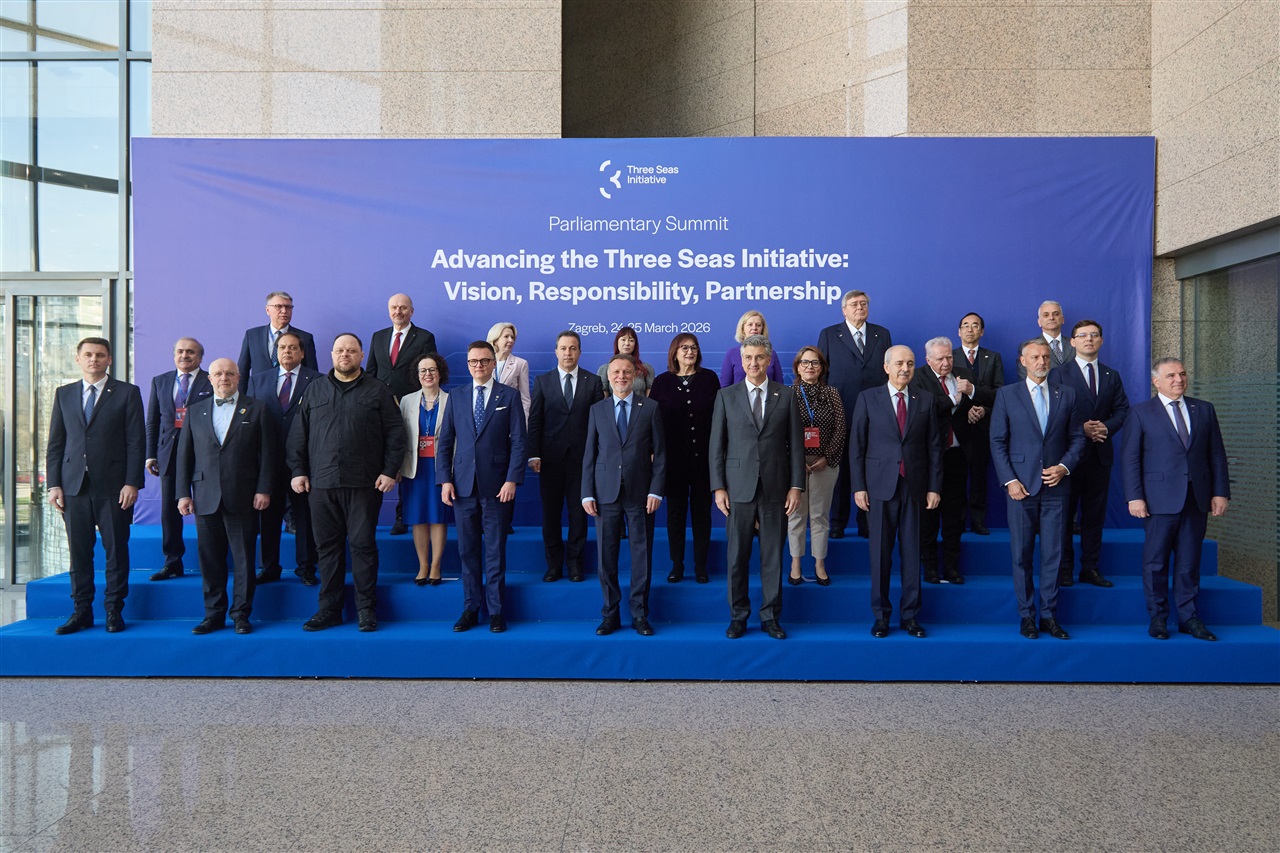
On March 24-25 the Parliamentary Summit of the Three Seas Initiative took place in Zagreb. In the final part of the Parliamentary Summit of the Three Seas Initiative deputy-speakers/vice-presidents and other high-level representatives of the parliaments of participating and associated participating states, as well as representatives of strategic partners and special guests, addressed the meeting highlighting the growing political importance and multidimensional character of the Initiative.


Speakers broadly reaffirmed the significance of the Three Seas Initiative as a platform for strengthening regional connectivity, economic convergence, and resilience in Central and Eastern Europe. Particular emphasis was placed on the development of infrastructure in transport, energy, and digital connectivity, as well as on enhancing energy security and diversification of energy sources.


Several delegations stressed that the Initiative should remain complementary to the framework of the European Union and contribute to the EU’s common objectives, including cohesion, competitiveness, and the green transition. The importance of aligning investments with sustainability goals was also emphasized, alongside ensuring good governance, transparency, and the efficient use of public and private financial resources. Participants also warned of an increasingly complex geopolitical environment. Strong and continued support for Ukraine was reiterated, and Russia’s aggression was clearly condemned. Broader security implications of ongoing conflicts were highlighted, with emphasis on the need to strengthen resilience through improved infrastructure, military mobility, and regional cooperation in defence and energy.


The discussion further underscored the strategic value of parliamentary diplomacy. Participants called for more structured and continuous parliamentary engagement, including the establishment of permanent cooperation mechanisms and stronger collaboration with governments, experts, and the business community. The importance of exchanging best practices and ensuring sustained political focus on the Initiative was highlighted.


Statements by strategic partners and associated countries confirmed the Initiative’s growing international dimension. Its role was emphasized not only as a regional infrastructure platform, but also as an instrument for strengthening broader European and transatlantic cooperation, as well as for supporting EU enlargement policy and the integration of partner countries. At the same time, the concrete impacts of key projects in the fields of energy, infrastructure, and innovation were highlighted, along with the need to accelerate their implementation in order to deliver visible results for citizens and the region’s economy.


The Summit concluded with the presentation and adoption of the Joint Statement by the Speakers/Presidents of Parliaments and high-level representatives of the participating states of the Three Seas Initiative. The document reaffirms the shared commitment to strengthening connectivity, resilience, and cooperation in the Three Seas region, while also supporting transatlantic relations and the EU enlargement policy. Participants strongly condemned Russia’s aggression against Ukraine and reiterated their unwavering support for Ukraine’s sovereignty, independence, and territorial integrity, as well as for the efforts to achieve a comprehensive, just, and lasting peace. The Joint Statement also calls for further strengthening of parliamentary cooperation through regular high-level meetings, stronger coordination among national parliaments, and more intensive involvement of relevant stakeholders, including the private sector.


The Parliamentary Summit was officially closed by the Speaker of the Croatian Parliament, who declared the Joint Statement adopted and welcomed the support of the Initiative’s associated participating states, Albania, Montenegro, Moldova and Ukraine, as well as its strategic partner, Türkiye. He also wished Slovakia success in assuming the chairmanship of the Three Seas Initiative following the Summit in Dubrovnik in April 2026.


Autor zdjęcia: Hina/Edvard Šušak

Read more


The Three Seas Local Government Congress under the Honorary Patronage of the President of Poland


The 6 th edition of the Three Seas Local Government Congress will be held May 27-28, 2026, under the Honorary Patronage of the President of the Republic of Poland, Karol Nawrocki. This distinction recognises the growing importance of the event, which has become a key platform for cooperation among the countries of Central and Eastern Europe, both in the economic and infrastructural dimensions.


Over five editions of the Congress (2020–2025), more than 5,000 participants from 24 countries have taken part, 104 discussion panels have been held, and 64 foreign delegations have visited Lublin. The scale and international character of the event confirm its increasing role in shaping dialogue across the Three Seas region.


We, the countries representing Central and Eastern Europe (…) through the Three Seas Initiative, Via Baltica, and Via Carpatia, share not only our voice and vision of building a civic community, but also tangible results showing that the Baltic States and the countries of Central and Eastern Europe are capable of implementing major infrastructure projects, emphasised President Karol Nawrocki during his visit to Vilnius last month.


These words perfectly capture the spirit of the Three Seas Congress, which brings together political, academic, and business communities around a shared goal, building a strong, integrated, and cooperative Central and Eastern Europe.


It is also worth noting that in April 2025, Poland hosted the 10th Three Seas Initiative Summit. During the event, participants emphasised the importance of infrastructure and economic cooperation in the region and the need to strengthen cohesion across Central and Eastern Europe. This year, the cooperation format has been expanded to include new members – Albania and Montenegro joined the Three Seas Initiative in the capacity of associated participating states, while Spain and Turkey became new strategic partners. It has already been announced that the 11th Summit will take place in Croatia in 2026.


We cordially invite you to take part in the Three Seas Local Government Congress! Registration will open in the end of January. More details will soon be available at www.congress.lubelskie.pl and on our social media channels.

Read more


Rada Programowa Samorządowego Kongresu Trójmorza 2026


W Lubelskim Centrum Konferencyjnym odbyło się posiedzenie Rady Programowej Samorządowego Kongresu Trójmorza pod przewodnictwem Prezesa Instytutu Rozwoju Samorządu Terytorialnego Województwa Lubelskiego, prof. Małgorzaty Ganczar. Było to pierwsze spotkanie nowej Rady na 2026 rok skupiającej przedstawicieli różnych dziedzin nauki z kraju i zagranicy, którzy w swej pracy realizują ideę inicjatywy trójmorskiej.

Skład Rady znajduje się pod linkiem: Rada Programowa 2026

Członkowie Rady zaakceptowali założenia programowe VI edycji Kongresu i regulamin przyznawania nagrody „Międzynarodowy Sukces w obszarze Trójmorza”. Rada wyłoni laureatów w czterech obszarach: Firma międzynarodowa, Firma regionalna, Osoba, która przyczyniła się do rozwoju Inicjatywy Trójmorza oraz w nowej kategorii Bezpieczeństwo. Termin zgłoszenia kandydatów do nagród mija 20 kwietnia 2026 r. na adres: irst.lubelskie@gmail.com. Regulamin oraz formularz konkursowy do pobrania poniżej:

– regulamin

– formularz

Tegoroczny Kongres zostanie podzielony na pięć forów tematycznych: międzynarodowe, naukowe, gospodarcze, bezpieczeństwa i młodzieży. Jak zaznaczył p. Marcin Szewczak – Członek Zarządu Woj. Lubelskiego, kongres stał się swoistą marką, która pod patronatem nowo wybranego Prezydenta RP, w tym roku może wejść w nowy etap w podejściu do kwestii Trójmorza. Agenda wydarzenia obfituje w tematy ważne z punktu widzenia regionu, kraju oraz Europy Środkowej i Wschodniej i stanowić będzie aktywną platformę do wymiany najbardziej aktualnej wiedzy, jak również będzie miejscem nawiązywania kontaktów i wzajemnego poznawania dziedzictwa historycznego.

Zapraszamy do rejestrowania się na VI edycję wydarzenia, która odbędzie się w dniach 27-28 maja 2026 r. w Lublinie.

Read more


The Three Seas Local Government Congress under the Honorary Patronage of the President of Poland


The 6 th edition of the Three Seas Local Government Congress will be held May 27-28, 2026, under the Honorary Patronage of the President of the Republic of Poland, Karol Nawrocki. This distinction recognises the growing importance of the event, which has become a key platform for cooperation among the countries of Central and Eastern Europe, both in the economic and infrastructural dimensions.


Over five editions of the Congress (2020–2025), more than 5,000 participants from 24 countries have taken part, 104 discussion panels have been held, and 64 foreign delegations have visited Lublin. The scale and international character of the event confirm its increasing role in shaping dialogue across the Three Seas region.


We, the countries representing Central and Eastern Europe (…) through the Three Seas Initiative, Via Baltica, and Via Carpatia, share not only our voice and vision of building a civic community, but also tangible results showing that the Baltic States and the countries of Central and Eastern Europe are capable of implementing major infrastructure projects, emphasised President Karol Nawrocki during his visit to Vilnius last month.


These words perfectly capture the spirit of the Three Seas Congress, which brings together political, academic, and business communities around a shared goal, building a strong, integrated, and cooperative Central and Eastern Europe.


It is also worth noting that in April 2025, Poland hosted the 10th Three Seas Initiative Summit. During the event, participants emphasised the importance of infrastructure and economic cooperation in the region and the need to strengthen cohesion across Central and Eastern Europe. This year, the cooperation format has been expanded to include new members – Albania and Montenegro joined the Three Seas Initiative in the capacity of associated participating states, while Spain and Turkey became new strategic partners. It has already been announced that the 11th Summit will take place in Croatia in 2026.


We cordially invite you to take part in the Three Seas Local Government Congress! Registration will open in the end of January. More details will soon be available at www.congress.lubelskie.pl and on our social media channels.

Read more