About the engagement of countries in the Three Seas Initiative, Russia’s attitude and the influence of pandemia.
Żurawski vel Grajewski: Russia cannot stop the Three Seas Initiative (INTERVIEW)
Americans have engaged in the Three Seas Initiative because it is an important business project for them. It opens new markets for their energy resources. Russia doesn’t like this, but it doesn’t have any tools to impact Central and Eastern Europe – says professor Przemysław Żurawski vel Grajewski in an interview with BiznesAlert.pl. He also stressed it was too early to determine the coronavirus’ impact on this project.
BiznesAlert.pl: Why has the US engaged in the Three Seas Initiative (TSI)?
Przemysław Żurawski vel Grajewski: One of the areas of cooperation within this initiative is the infrastructure used for transmission of energy sources – mostly gas. TSI could introduce American gas to a huge market with 100 million consumers. This will happen if proper infrastructure is constructed. We should remember that in the beginning the TSI was based on the so-called North-South Corridor, which will connect Poland’s LNG terminal in Świnoujście to the floating terminal on Croatia’s Krk island, which is under construction. The Constanta LNG terminal in Romania could be the third part of this infrastructural endeavor. This means the region could potentially drive out Russian gas, which so far has been its only energy source, from its territory.
What are the specifics of the US engagement in developing this initiative?
The first specific action is to spend a billion dollars on financing energy infrastructure projects. This was promised by Mike Pompeo, the US Secretary of State, during the Munich Security Conference. At first glance it doesn’t look like a lot of money, but it is a message, which says that the initiative is taking place under the US political umbrella. It makes the entire project look more serious. We should also remember that this is a message to the American business. The US government rarely makes large investments in such supra-national projects on its own. This is mostly done by private US companies. The billion dollar sends a message that this region has US support and that it is worth to invest here. This may start the snowball effect, which in time may become the driving force for more investments made by private American firms. Another element is support in the aspect of security. Americans are famous for protecting their businesses, which sometimes involves the usage of military force. The more American investments in the region, the more secure the region becomes, as it is protected from any potential invasion, e.g. from Russia. This is a very important aspect. By attracting American investments, we are attracting here – to the region of the eastern flank of NATO, the American security umbrella.
Could our eastern neighbors, such as Ukraine or Belarus get engaged in the TSI?
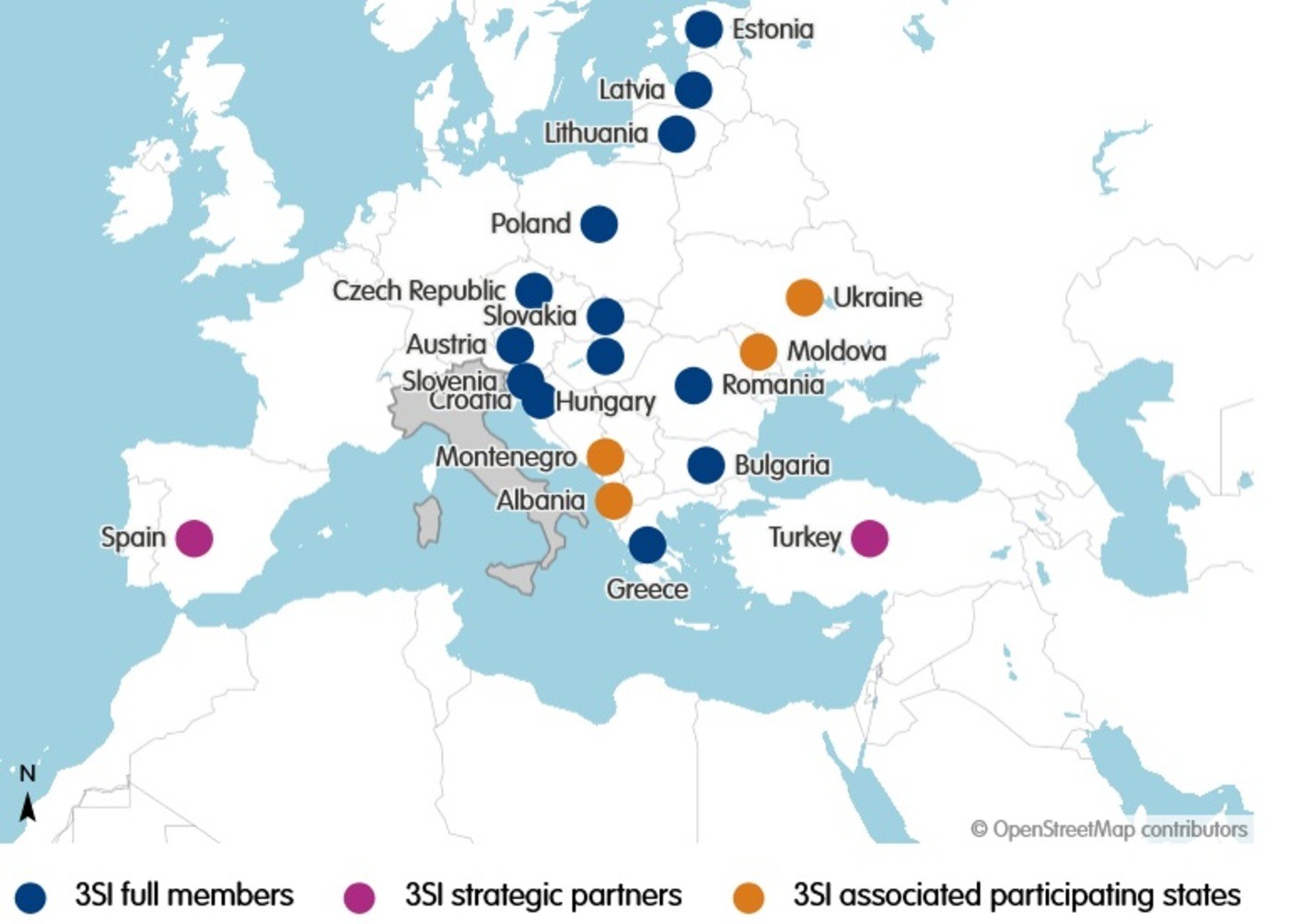
On 29 August 2019 the Energy Resources of Ukraine signed a deal with Poland’s PGNiG to supply US natural gas to Ukraine. After that, right before the 80th anniversary of the outbreak of World War II, the Polish President Andrzej Duda, the US VP Mike Pence and the President of Ukraine Volodymyr Zelensky signed a memorandum of cooperation to strengthen the security of regional gas supplies. This political declaration ensures a new transmission route for gas to Ukraine. Its success has been confirmed by the first delivery of American LNG to Ukraine that reached the LNG terminal in Świnoujście last November. The recent letter of intent, which has been reported on by the media, says the US will deliver about 6-8 bcm of gas a year to Ukraine via Poland. Since only EU members are allowed into the TSI, Ukraine cannot formally join the club. However, it can participate in projects pursued by the TSI. Cooperation as part of the TSI is also taking place with regard to road infrastructure and Ukraine, as a signatory of the second Łańcut declaration, is a full member of the Via Carpatia project, which is one of the flagship projects of the TSI. Thanks to Poland, this is the way in which Ukraine is able to take part in some of the TSI endeavors. This is an important factor from a political perspective because it tears Ukraine from the Russian sphere of influence.
Are there similar plans when it comes to Belarus?
The situation is dynamic. There is no trust between Alexander Lukashenko and Vladimir Putin. The first one is trying to protect his life and the life of his family. In case of Belarus all scenarios are on the table. Russia is embedded in Belarus a lot more than in Ukraine, this is also because of Lukashenko’s past decisions. Therefore, Moscow has more influence over this country. I believe that Belarus would be able to free itself from Russia’s grip only if there was a political implosion at the Kremlin. Nobody knows for how long Russia will be able to finance its imperial projects. We also don’t know how its imperial capacity will be affected by the coronavirus and the extremely low oil prices.
If America was determined, and if an opportunity presented itself, and if Washington noticed it, and decided that getting Belarus out of the Russian sphere of influence was a a low hanging fruit, it would be possible to take concrete actions towards Belarus. However, so far it doesn’t look like it’ll happen. America is testing various options, but Russia is still in control of the situation.
So how can Russia try to torpedo the TSI?
Russia’s impact in the TSI area is limited. This project includes EU member states and NATO countries – apart from Austria. The only tool that Russia has been using for centuries is political destabilization of countries it believes are its enemies. As Emperor Alexander III said “Russia has only two allies – its army and its fleet”. This means it treats the entire world as either its current or future enemy. The closer and smaller its neighbors are, the more they are treated like enemies. Therefore, attempts at destabilizing those states are part and parcel of Russian politics. This means Moscow may want to impact elections in the TSI states and try to pull individual countries away from the initiative. This will happen by propping up political movements that are against the TSI. To an extent this is what is happening in Croatia where president Kolinda Grabar-Kitarović, who was a strong supporter of the TSI, was replaced by Zoran Milanović, who is completely opposed to it. Of course, I am not saying this happened because of Moscow, but this change is undoubtedly in line with its interests. Still, these are individual incidents and I doubt that any attempts made by Russia to impact politics in the TSI countries could be so successful that they could break the initiative up.
Is it possible for China’s increasing engagement in Europe to impact the TSI? Is the Chinese idea of “one belt, one road” in opposition to the US engagement?
The goal of the New Silk Road idea wasn’t to undermine the US support for TSI. At some point China realized that its economy, which is dependent on sea transport, could be completely blocked by the US navy in case of a conflict with the USA. This is why they started to look for a way to connect with Europe via roads. However, we should appreciate the fact that CEE states have been in a close transatlantic partnership for years. The majority of TSI states constitute NATO’s eastern flank. Apart from some exceptions, nobody in this region would have a hard time picking sides between China and the US. The choice is simple – it’s the US.
What are TSI’s biggest challenges?
I think there are two. The first one and the main one is money. After years of successful initiatives at the governmental level, we should finally start to translate political initiative to executive budgetary decisions. Now that a huge economic crisis is coming, it will be more difficult to create a fund to bankroll the TSI. This may be one of the biggest threats. The second challenge are the differences between the TSI members when it comes to their national and economic interests. The contrast between Austrian and Romanian economies is stark, just as in the case of Estonia and Bulgaria. This is why any claims that the TSI is a political project are not serious. This project is glued together with infrastructural programs and we should do whatever is in our power to implement them. The economy of the TSI’s biggest participant – Poland and the perfect Polish-American relations that attract Washington’s support to the initiative allowed us to be hopeful about TSI projects related to our country, but that was before the coronavirus pandemic started. Now this may change, but it is too early to tell what the pandemic’s economic impact will be.
Interview by Mariusz Marszałkowski
Source: biznesalert.pl
Read more